

Far Acre
You leave the city for an overgrown block and an old sawmill. Read each log before the blade goes in: chalk where you think the knots and the rot are, and how deep, mark your cuts to guide the blade and plan out your orders. The saw shows how well you read, and the boards build your homestead.
No user reviews: 0 user reviewsEarly accessComing soon
- Windows
At a glance
- Release
- 31 Mar 2027
- In 125 days
- Languages
- 1
- Supported
Trailers and screenshots
1 / 19
About this game
You sold everything and left the city. The money went into an overgrown piece of land at the edge of the country and a second-hand portable bandsaw mill. There's a tarp on poles over a cot and a camp stove, and the dealer down the road has already dropped a deck of logs by the mill.
Each of those logs has knots somewhere inside it, and some have rot. The bark gives part of it away.
Far Acre is a homesteading game about reading logs and sawing them well. Everything you build comes from logs you saw yourself. The plan is the whole homestead, raised from your own timber over free Early Access updates: the lumber business, the cabin and the barn, the workshop and a small farm, all off the grid.
The first update, Green Lumber, starts with a log you have to read and boards people will pay for. It ends on the night you move into a cabin built from your own timber, and the tarp comes down.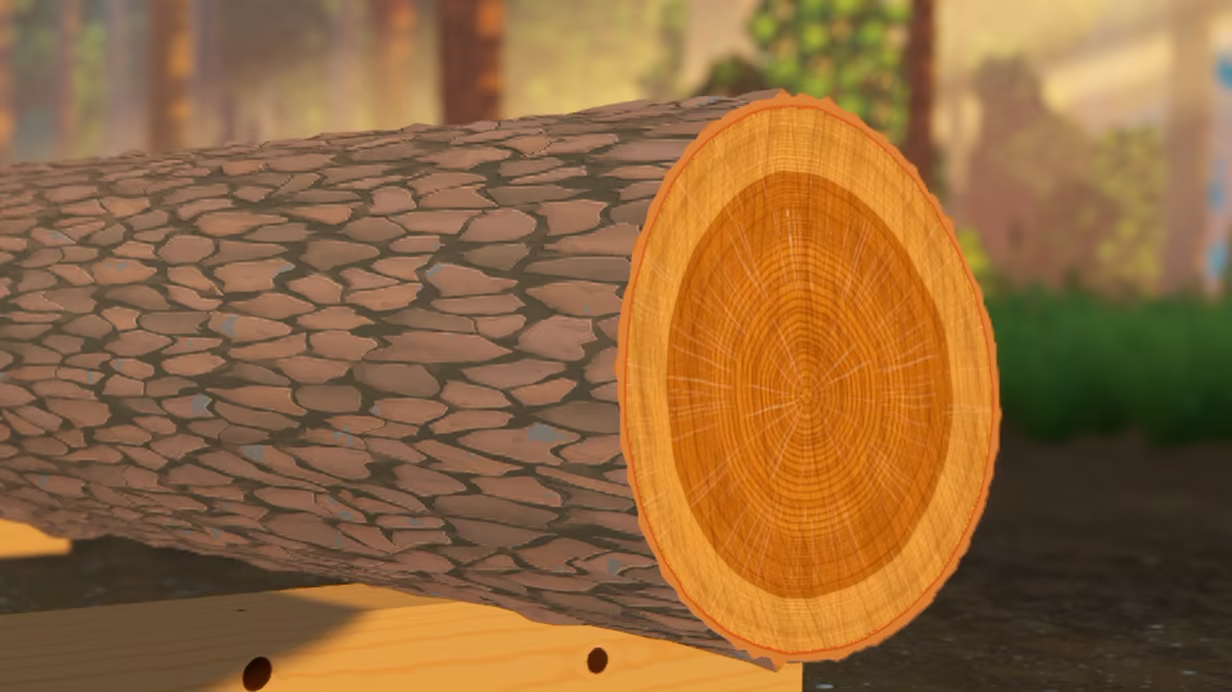 The wood here comes from the log, and each log is grown by an algorithm that mimics how real wood grows. Rings, heartwood, rays, knots, heart rot and the odd fence nail the tree grew around: each log carries its own. Saw it at any height and the fresh face shows what's there. Eight species so far, from white oak and black walnut to white pine and red cedar.
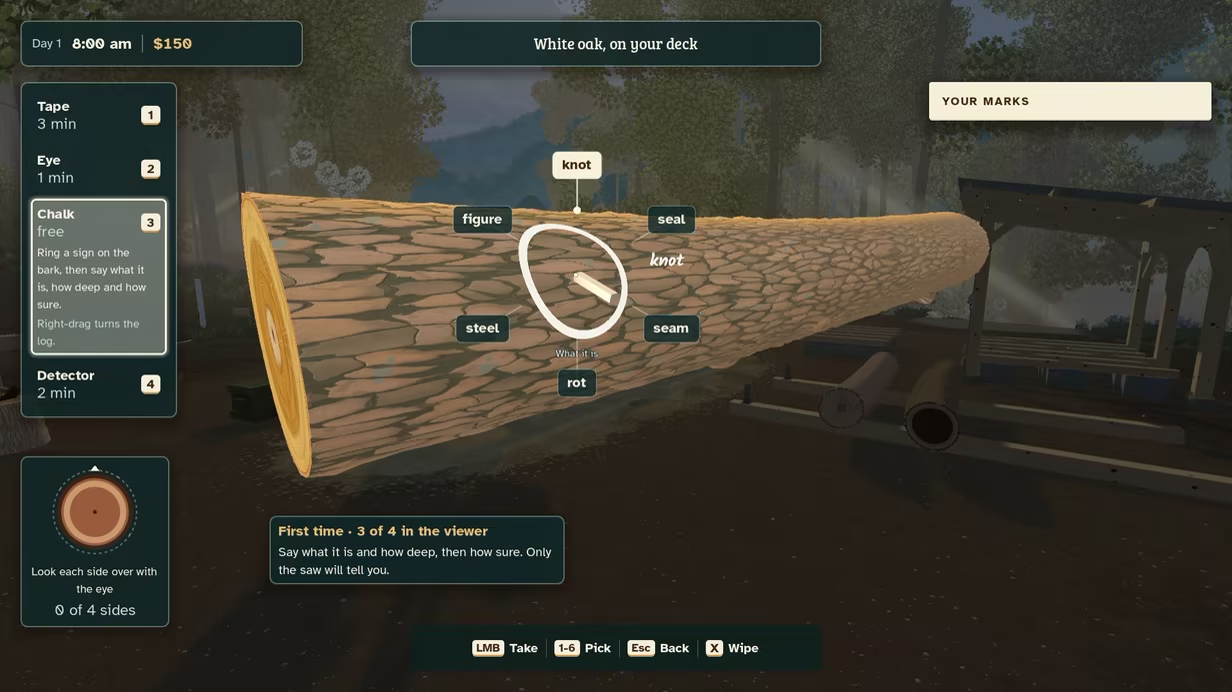 Look closely at any log and it turns in front of you. Bring an end round and the rings read flat on. A bump in the bark is a branch the tree grew over, and a dark seam can run to the heart.
Then take the chalk and make your call. Ring the spot and say what you think is under it: a knot, a seal, a seam, rot, steel or figure. Say how deep it runs and how sure you are. The chalk writes your call beside the ring, and it stays on the log until the blade goes in.
The saw is the only reveal. When the log is sawn up, a card goes through every sign it carried and tells you which ones you called right, which you found under the wrong name and which you missed. Ring one stub out of eight and the card says one called right, seven missed.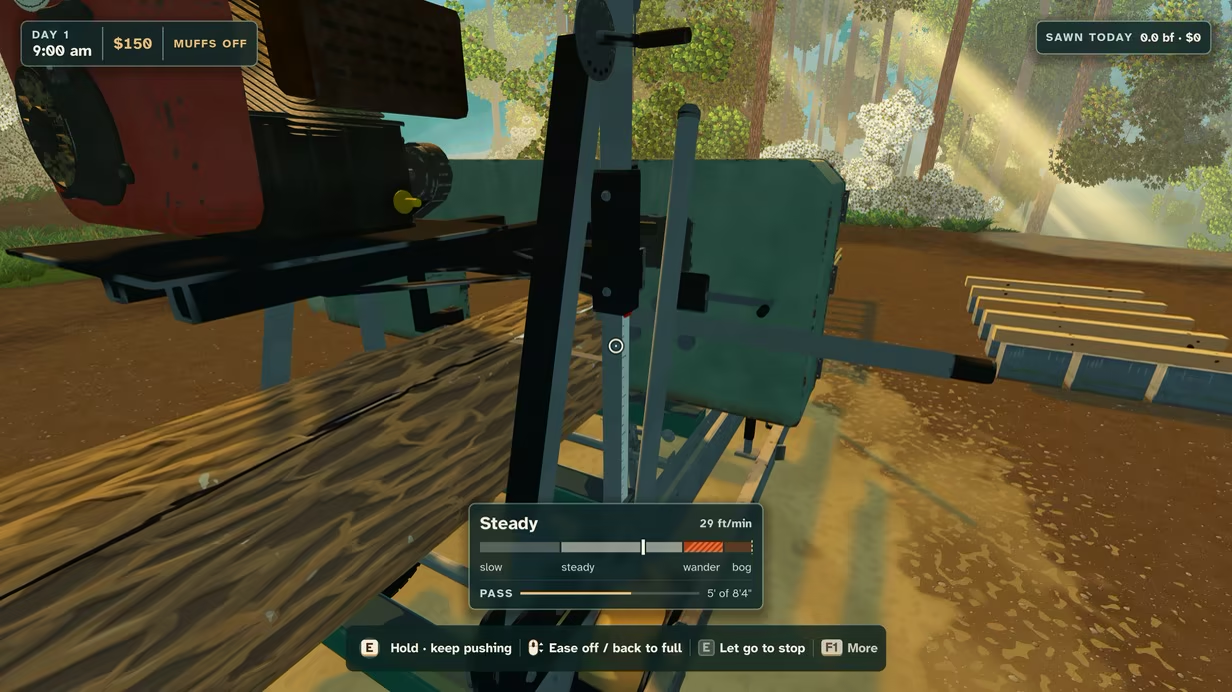 Roll the log onto the bunks, clamp it, shim the small end and set the blade. Push the head too fast and the cut wanders. Too slow and you're burning daylight. Turn the log a quarter at a time to square up a cant (the squared-off heart of the log). Bark dulls the blade fastest, so your blade hates bark even more than you do. Hit a nail and you file the struck teeth at the bench; a band that's dull all along goes out to the sharpening service.
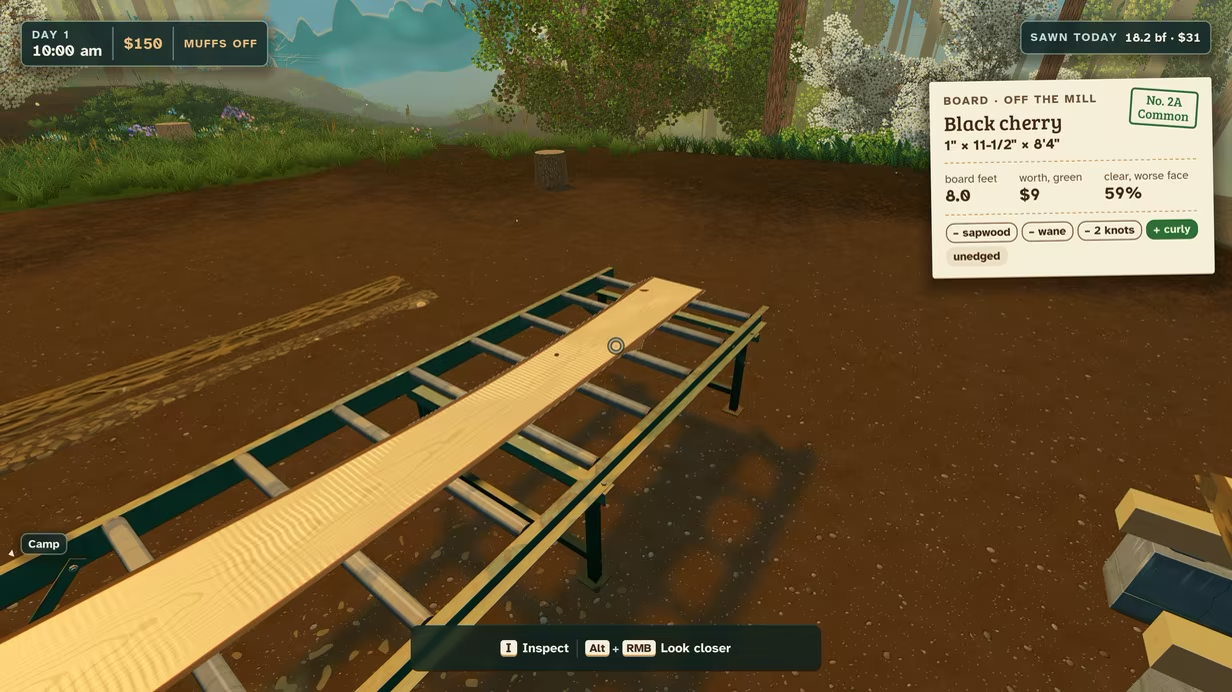 Every board comes off with a grade card: species, size, board feet (a foot square, an inch thick), and what it lost points for. Two knots and a strip of sapwood and that cherry drops to No. 2A Common. Open the next log on a better face. Sizes read in inches and board feet, or switch to millimeters and cubic meters in the settings.
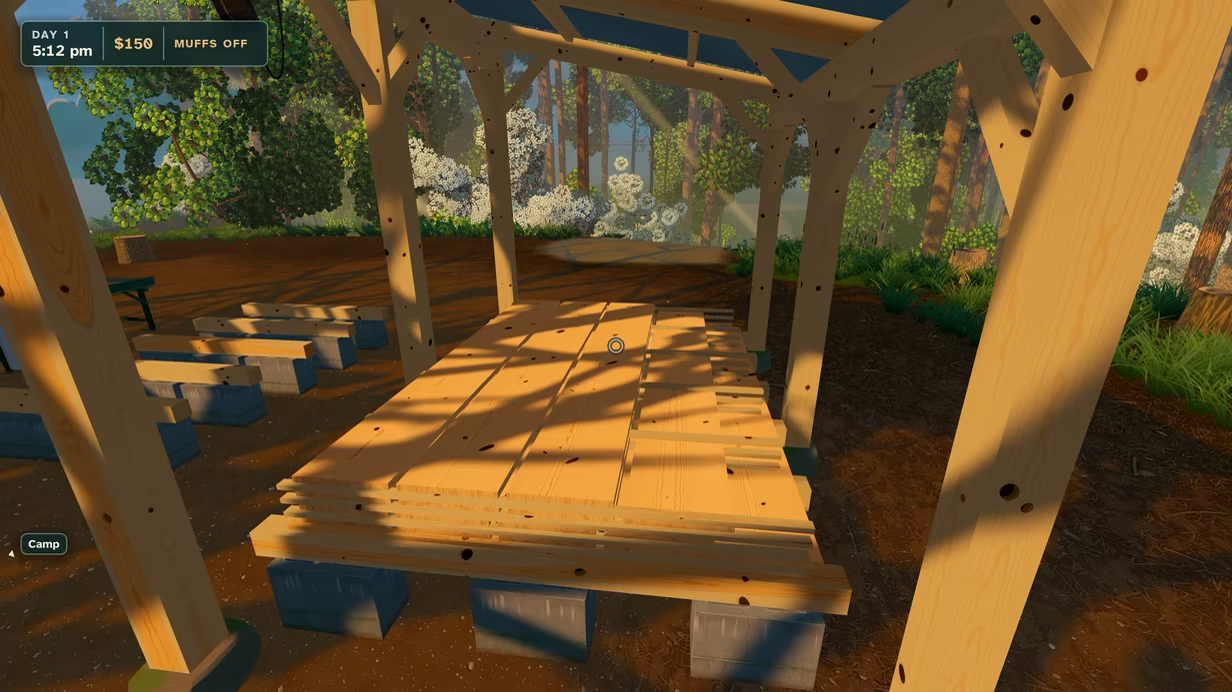 White oak comes off the mill at about 72% moisture. Stack it on stickers (thin spacer sticks) in the shed and 1-inch boards are air-dry in about twelve days. In a hurry? Build a solar kiln from your plainest boards and take it down to 8% for the furniture makers who want kiln-dried.
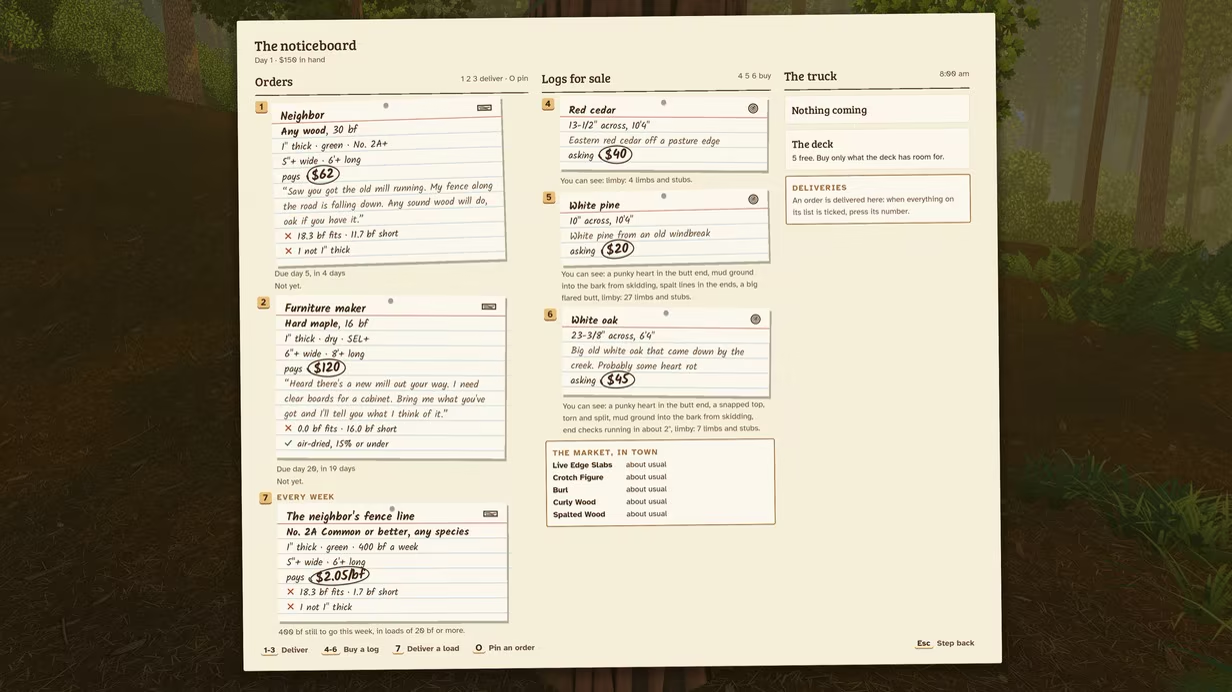 Furniture makers pin up what they want, down to species, grade, size and how dry. Fill the order and the money buys the next log. Slabs and offcuts go on the firewood pile and sell for two dollars apiece.
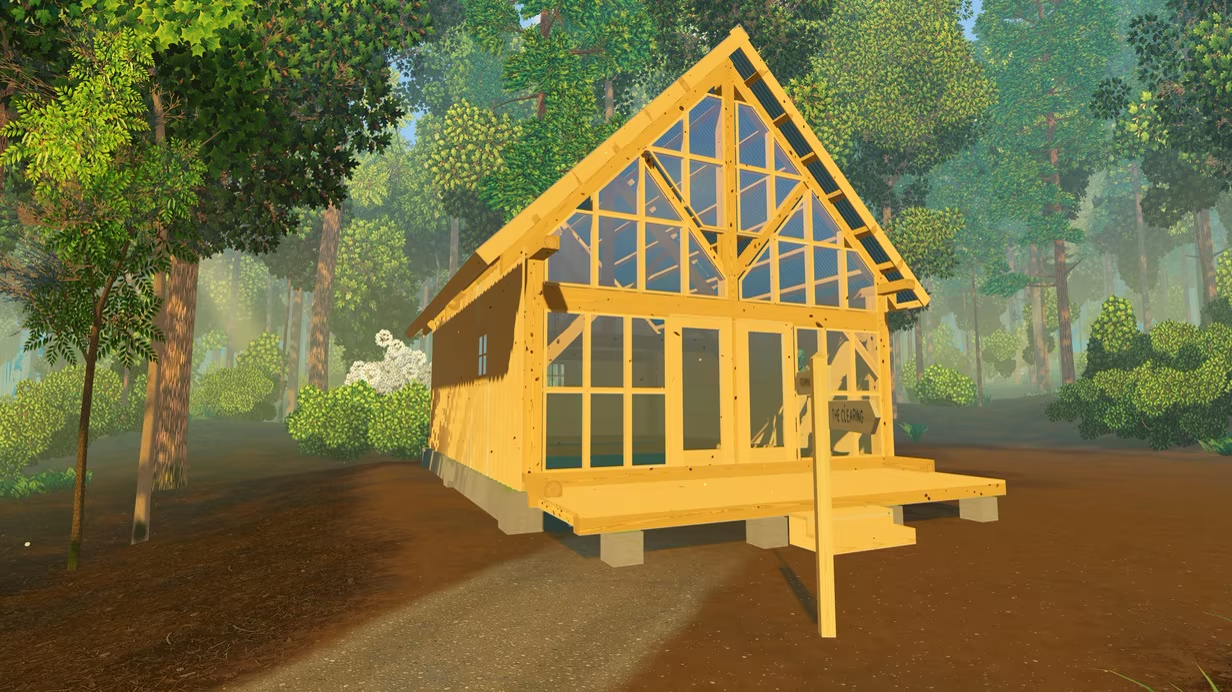 The first building is the Glass Gable, a timber cabin 20 feet by 26 (about 6 metres by 8) with a glazed gable end. Every timber and board in it comes off your mill, bay by bay. Close it in with your own shakes and siding. Then furnish it and move in. We're building this part of the game now, and it is in at Early Access launch.
At Early Access launch: reading logs, the seller's yard, the mill, grading, drying, the solar kiln, orders, the seasons from spring blossom to winter, the Glass Gable cabin and the Sawyer's Manual.
Each of those logs has knots somewhere inside it, and some have rot. The bark gives part of it away.
Far Acre is a homesteading game about reading logs and sawing them well. Everything you build comes from logs you saw yourself. The plan is the whole homestead, raised from your own timber over free Early Access updates: the lumber business, the cabin and the barn, the workshop and a small farm, all off the grid.
The first update, Green Lumber, starts with a log you have to read and boards people will pay for. It ends on the night you move into a cabin built from your own timber, and the tarp comes down.
Every log is grown from the pith out
The wood here comes from the log, and each log is grown by an algorithm that mimics how real wood grows. Rings, heartwood, rays, knots, heart rot and the odd fence nail the tree grew around: each log carries its own. Saw it at any height and the fresh face shows what's there. Eight species so far, from white oak and black walnut to white pine and red cedar.Read it before you saw it
Look closely at any log and it turns in front of you. Bring an end round and the rings read flat on. A bump in the bark is a branch the tree grew over, and a dark seam can run to the heart.
Then take the chalk and make your call. Ring the spot and say what you think is under it: a knot, a seal, a seam, rot, steel or figure. Say how deep it runs and how sure you are. The chalk writes your call beside the ring, and it stays on the log until the blade goes in.
The saw is the only reveal. When the log is sawn up, a card goes through every sign it carried and tells you which ones you called right, which you found under the wrong name and which you missed. Ring one stub out of eight and the card says one called right, seven missed.
Saw it like a sawyer
Roll the log onto the bunks, clamp it, shim the small end and set the blade. Push the head too fast and the cut wanders. Too slow and you're burning daylight. Turn the log a quarter at a time to square up a cant (the squared-off heart of the log). Bark dulls the blade fastest, so your blade hates bark even more than you do. Hit a nail and you file the struck teeth at the bench; a band that's dull all along goes out to the sharpening service.Graded on what's really there
Every board comes off with a grade card: species, size, board feet (a foot square, an inch thick), and what it lost points for. Two knots and a strip of sapwood and that cherry drops to No. 2A Common. Open the next log on a better face. Sizes read in inches and board feet, or switch to millimeters and cubic meters in the settings.Drying on stickers, or in a solar kiln
White oak comes off the mill at about 72% moisture. Stack it on stickers (thin spacer sticks) in the shed and 1-inch boards are air-dry in about twelve days. In a hurry? Build a solar kiln from your plainest boards and take it down to 8% for the furniture makers who want kiln-dried.Orders on the noticeboard
Furniture makers pin up what they want, down to species, grade, size and how dry. Fill the order and the money buys the next log. Slabs and offcuts go on the firewood pile and sell for two dollars apiece.A cabin from your own timber
The first building is the Glass Gable, a timber cabin 20 feet by 26 (about 6 metres by 8) with a glazed gable end. Every timber and board in it comes off your mill, bay by bay. Close it in with your own shakes and siding. Then furnish it and move in. We're building this part of the game now, and it is in at Early Access launch.The manual on the bench
The Sawyer's Manual is a field guide to running a small bandsaw mill, written from how portable mills are really run: reading a log, opening the first face, sawing for grade, quartersawing for figure, drying slowly and evenly. The game follows the book. Do what it says and you get what it promises. Rush the drying and your oak checks.At Early Access launch: reading logs, the seller's yard, the mill, grading, drying, the solar kiln, orders, the seasons from spring blossom to winter, the Glass Gable cabin and the Sawyer's Manual.
Coming in Early Access: the road to V1
This is the first step. The rest of the homestead comes update by update, all from your own timber.- The Standing Timber update: fell your own trees on the ridge and skid the logs down to your deck. The furniture makers start ordering from you by name.
- The Kitchen Garden update: dig the garden and plant the orchard, with a hen house between them.
- The Dried In update: move the yard down to the terrace under a mill shed you frame yourself. Raise the workshop, and add on to the cabin.
- The Barn Raising update: an aisled barn with its tractor, and livestock in the pasture. Water comes down from the spring, and power from panels on the workshop roof.
- The Home Place update: the bees, the workshop fitted out for furniture, and a white-oak porch. That's V1, and the game leaves Early Access.
Details
| App ID | 5500110 |
|---|---|
| Type | Game |
| Planned release | 31 Mar 2027 |
| Developer | SparkHut Studio |
| Publisher | SparkHut Studio |
| Platforms |
|
| Languages | 1 languages |
| Website | faracregame.com (opens in a new tab) |
Community tags
Ranked by player votes
- Simulation1.2K votes
- Building803 votes
- Crafting755 votes
- Life Sim707 votes
- Cozy659 votes
- Job Simulator562 votes
- Hobby Sim530 votes
- Relaxing498 votes
- First-Person466 votes
- Indie466 votes
- Early Access434 votes
- Nature434 votes