

Space Simulation Toolkit
Physics sandbox game that uses a graphics card as a supercomputer. Change the laws of physics, design mechanisms, create A-Life worlds and inhabit them with living beings, experiment with evolution and AI.
Very Positive: 80% of 519 user reviews are positiveEarly access
- Windows
At a glance
- Playing now
- 12
- 24h peak 12
- All-time peak
- 14
- 15 Nov 2026
- Lowest price
- $17.77
- Now $24.99
- Positive reviews
- 80%
- 519 reviews
- Released
- 5 Jun 2020
- Early access
- Last patch
- 9 Nov 2026
- Patch notes on Steam
Space Simulation Toolkit has 12 players on Steam right now, with a 24-hour peak of 12, and an all-time peak of 14 on 15 Nov 2026.
Trailers and screenshots
1 / 16
About this game
Space Simulation Toolkit is a physics sandbox where every world is built from particles and simulated live on your graphics card. Tune gravity, heat and the properties of every material, and see what the universe does next.
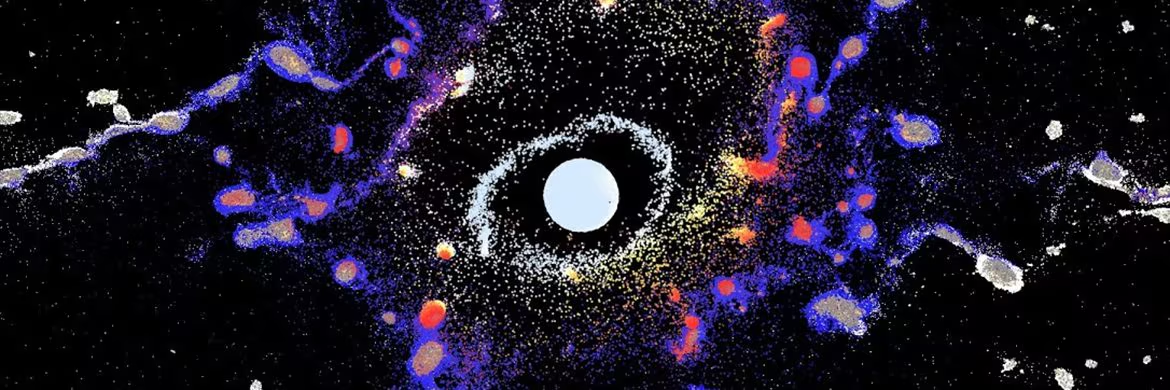
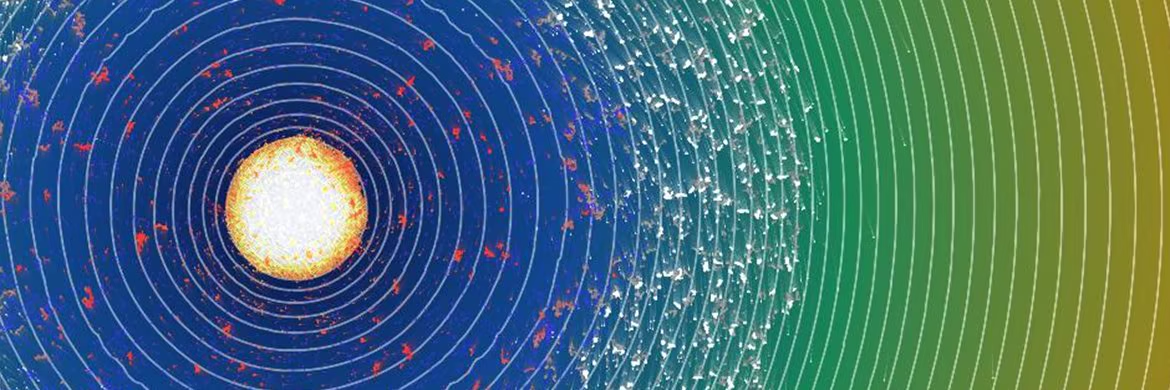
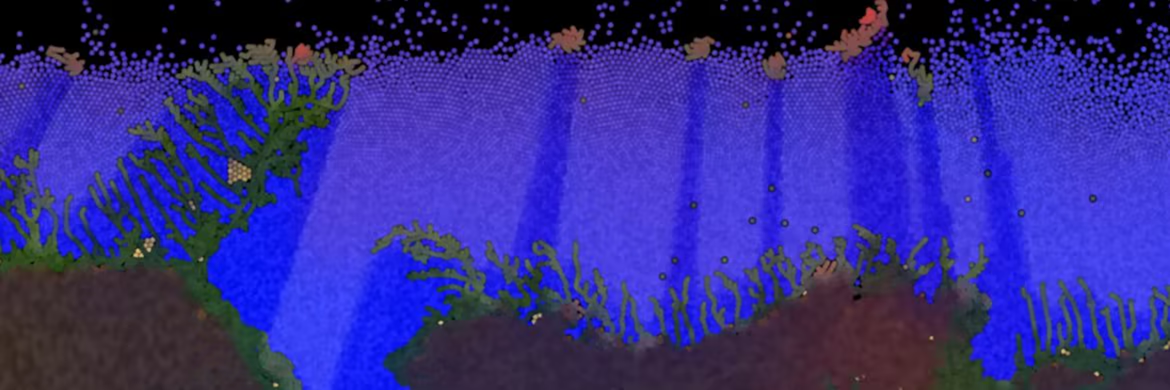
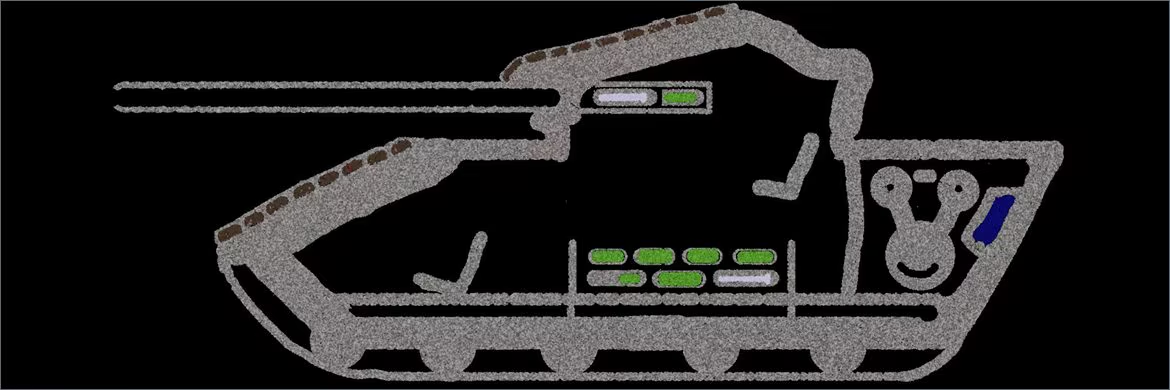 Image: Workshop item «T72 Penetration Simulation» by moritz12345
Smash planets
In the Asteroid² scene, asteroids fall onto a planet built in layers: an ice shell, an ocean, earth and a molten lava core. Every layer is made of particles with their own mass, heat and strength, and rock heats up as it shatters and can melt, so no two impacts end the same way. Pause at any moment, select a piece of the debris and inspect its mass, temperature and speed.Light up stars, spin up galaxies
In the Star scene, a cold, spinning cloud of ice and lava collapses under its own gravity into a star, with clumps of debris still circling it. In the Self Gravitating Disk, up to millions of particles pull on each other at once, and the spinning disk breaks into swirls and clumps. Draw in more matter and its gravity joins in.See gravity itself
Pick Gravity in the Views panel and the gravity of the scene appears as a colour map traced with isolines. In the Star scene the map follows the pull of the particles themselves as the cloud collapses; in Planets it shows how the fields of the planets add up. Colour it by the potential, the strength or the x and y components of the pull, in one of three palettes.Watch life evolve
In Biome, every seed carries DNA that tells it how to grow: it gathers water and sunlight and builds a plant cell by cell. In Protobiome, herbivores eat the plants, carnivores hunt the herbivores, and newborns inherit DNA with the odd mutation, so forms drift from generation to generation.Build tanks, test the armour
Players build whole tanks out of particles and fire shells at them to see whether the armour holds. Every plate is held together by links that snap under load, so a shell can tear it open or punch straight through. One of the most subscribed items in our Workshop is a tank penetration test.Image: Workshop item «T72 Penetration Simulation» by moritz12345Drive machines
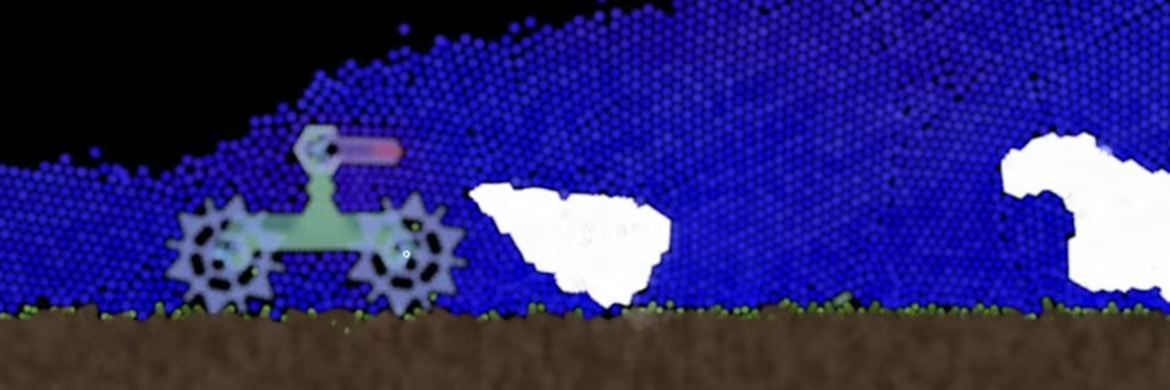
Drive ready-made machines like the Chassis and the Icebreaker with the arrow keys. Solar panels power their rotors and lasers, and they are made of the same matter as everything around them, so their links snap and their metal melts for real. Select any part of a world, edit it as a group and save it as your own item.Share through the Workshop
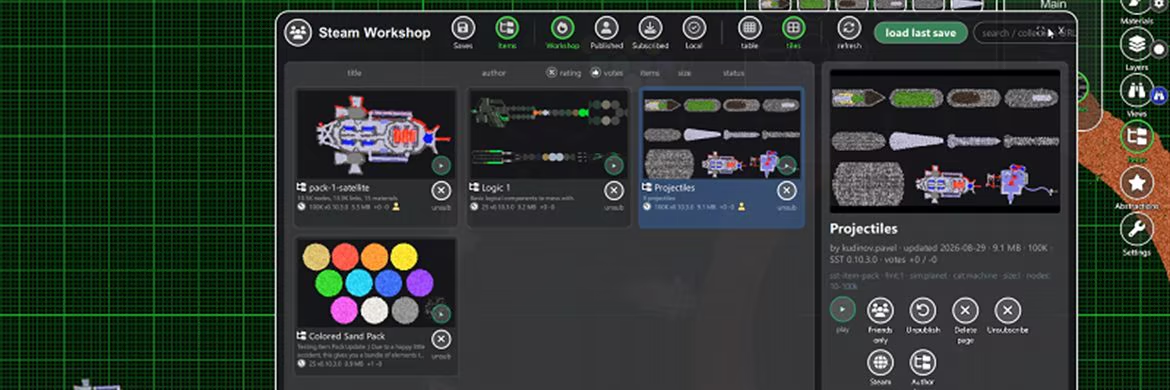
Browse, search, vote and subscribe to other players' worlds and item packs without leaving the game, and publish your own from the same window. Downloaded items keep working when Steam is offline. Item packs bundle whole sets of items, from projectiles to coloured sand, and their items paste into both Planet and Biome.Measure and align
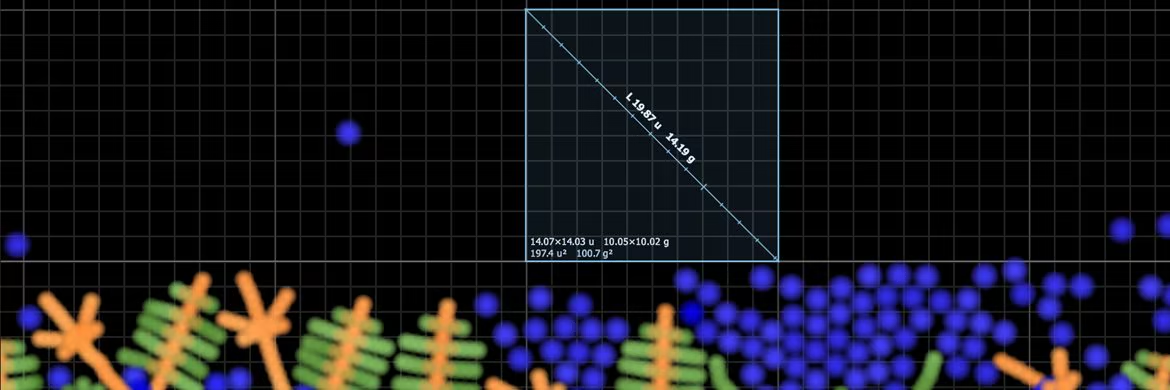
Drag a selection box and its ruler shows the diagonal, the sides and the area, in world units and in grid steps. Turn on the hex or rectangular grid, set its angle and step, and snap your drawing to it to build machines from exact parts.Check your GPU first
The whole simulation runs on your graphics card. SST runs best on NVIDIA GPUs (CUDA); most AMD GPUs run it through OpenCL. Please try the free demo before buying and keep your video driver up to date.Early Access
SST has been in Early Access since 2020 and is updated regularly. Expect rough edges and big changes along the way.From the developer
You have probably heard the theory that we live inside a computer simulation. I wanted to build a sandbox where you can make one yourself: choose the laws of physics, build a world from atoms and see whether life appears in it.Details
| App ID | 1196080 |
|---|---|
| Type | Game |
| Release date | 5 Jun 2020 |
| Developer | Pavel Kudinov |
| Publisher | Pavel Kudinov |
| Platforms |
|
| Languages | 24 languages |
| Website | sstgame.com (opens in a new tab) |
Game modes
- Single player
Perspective
- Bird view / Isometric
Community tags
Ranked by player votes
- Simulation1.2K votes
- Sandbox914 votes
- Physics890 votes
- Indie867 votes
- Early Access867 votes
- Artificial Intelligence574 votes
- 2D562 votes
- Space527 votes
- Space Sim527 votes
- Education504 votes
- 2D Platformer386 votes
- Exploration351 votes
News and updates
History
Players
Prices and charts
Price in each region
| Region | Price | Discount | Lowest | Sale ends |
|---|---|---|---|---|
| South Africa | R 169,99 | - | - | |
| United States Your region | $24.99 | - | - | |
| Europe | 18,99 € | - | - | |
| United Kingdom | £16.69 | - | - |