

The Last Pantheon
The Last Pantheon is a Roman inventory-building autobattler: arrange items into a 3×3 grid, forge them into stronger versions, and assault the houses of the Roman Pantheon.
Published by None
- Windows
At a glance
- Release
- To be announced
- Languages
- 1
- Supported
Trailers and screenshots
1 / 6
About this game
Build Your Inventory. Create an Engine. Kill the Gods.
The Last Pantheon is an inventory-building autobattler focused on discovering powerful interactions between items.
Arrange items on a 3×3 grid to take advantage of adjacency effects. Create combinations that generate resources, convert them into new effects, and turn those effects into powerful payoffs.
Once battle begins, your build takes over.
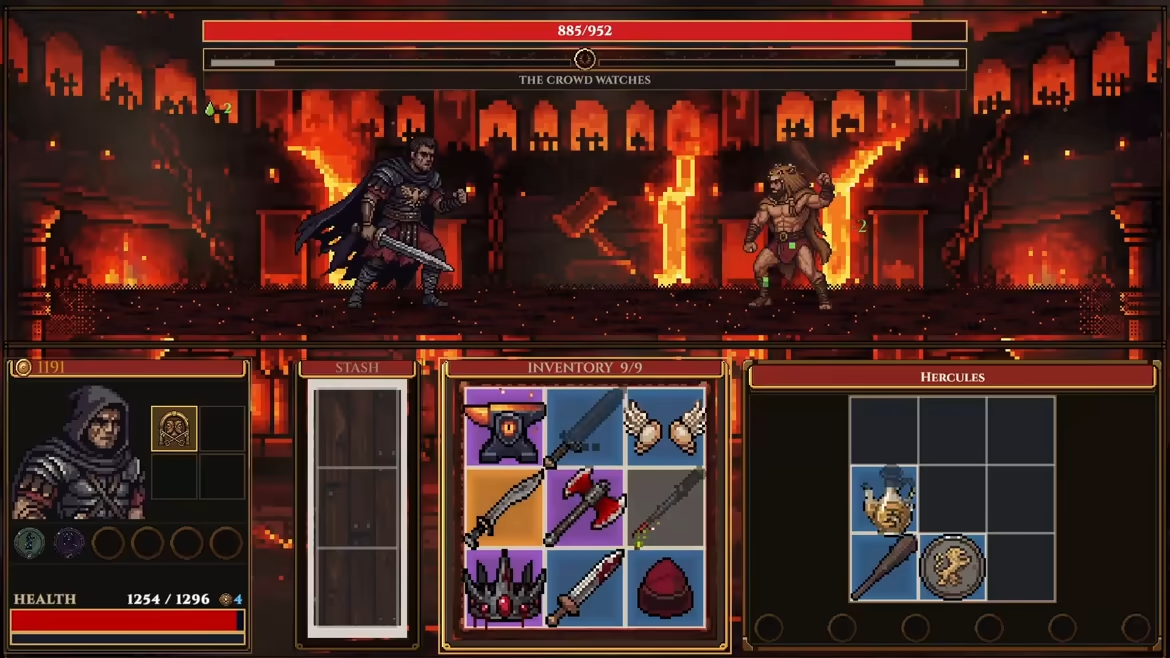
BUILD YOUR ENGINE
Every item takes a single space, but where you place it matters.
Combine items that generate effects with items that consume, convert, or amplify them. A simple interaction can become the foundation of an entire build as more pieces fall into place.
There is no single correct build. Experiment with different items, tags, triggers, cooldowns, and positioning to discover engines that work together.
MERGE AND GROW
Found a second copy of an item you love? Drop it onto the first.
Merging levels an item up, making it stronger with every copy you infuse. Decide whether to go deep on a few powerful pieces or wide across a full grid.
MASTER 8 ITEM TAGS


Build around eight distinct item tags:
Winter • Mystic • Forge • Sacred • Flame • Venom • Wild • Blood
Specialize heavily in one strategy or combine tags to discover interactions between them.
Stack Burn with Flame.
Poison with Venom; Poison goes straight through Shields and never fades on its own.
Lock down enemy items with Winter's Slow and Freeze.
Bend cooldowns and activations with Mystic.
Raise walls of Shield with Forge.
Heal and Regenerate with Sacred.
Sacrifice health for power with Blood.
Or find combinations that weren't obvious when you picked up the individual pieces.

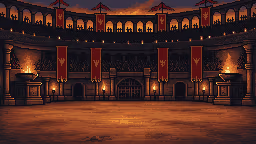
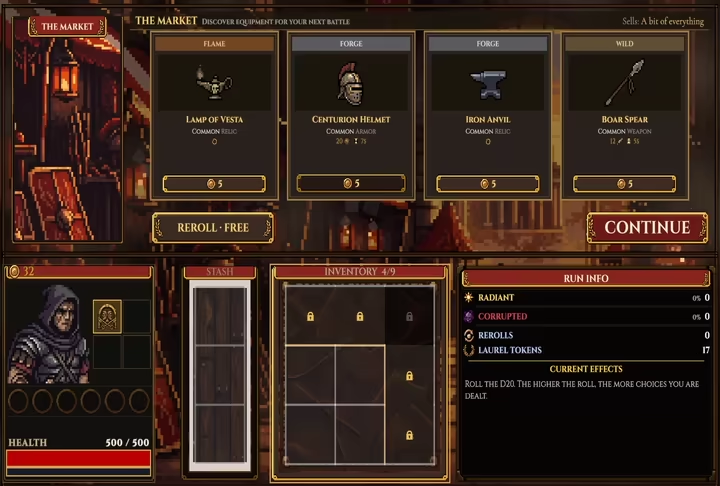
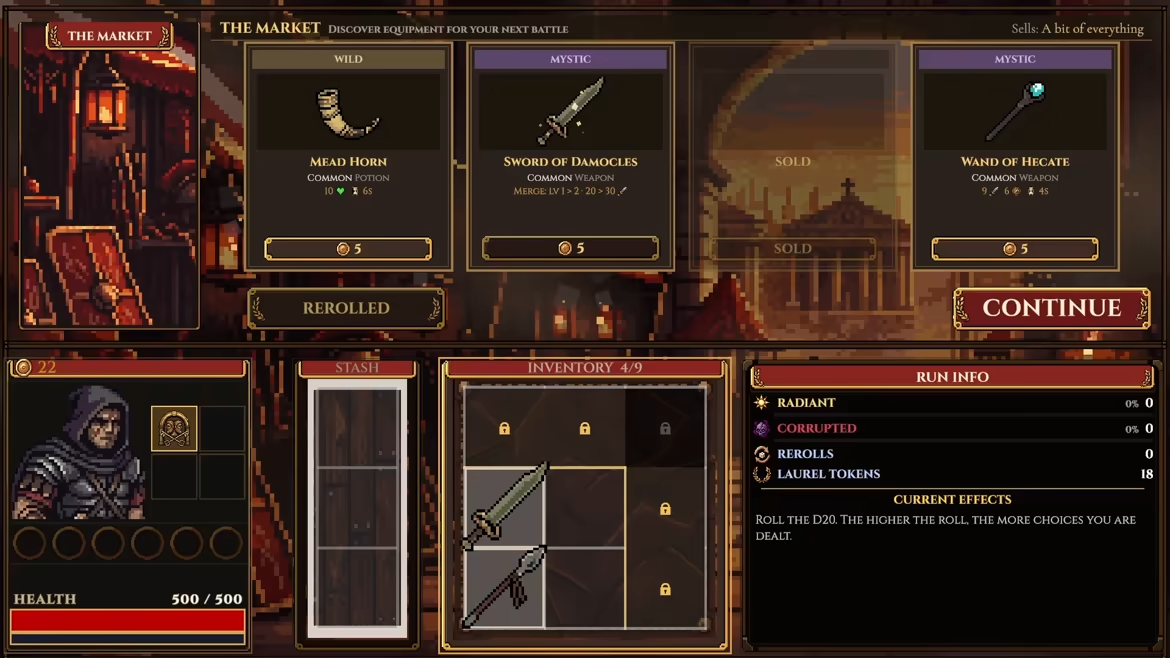
EVERY SLOT MATTERS
You start with four inventory slots, and you buy every slot after that, up to a 3×3 grid.
Every slot you add is gold you didn't spend on an item, and with at most 9 spaces, every item competes for a place in your final build. Reposition your inventory, replace weaker pieces, and decide which interactions are worth building around.
An item may be useful alone. The right four items working together can define your entire run.
WALK THE VIA SACRA
Each run is an assault on one house of the Pantheon, walked along the Via Sacra across three laps: Vengeance, Rebellion and Liberation.
Roll a D20 each day to draw your options: events across the city, the legion camp and sacred ground; shops run by themed merchants; and arena fights.
Fate: your choices fill two bars, Radiant and Corrupted. When they turn the next events in your hand, those events become safer and gentler, or more powerful at a real cost.
Demigods: at the end of each lap a demigod stands in your way.
The god: at the end of the third lap, the god of the house is waiting.
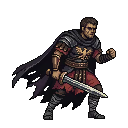

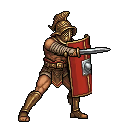
AUTOMATIC COMBAT, MEANINGFUL PREPARATION
You don't control attacks during battle.
Your decisions happen before the fight. Item placement, cooldowns, adjacency, defensive layers, status effects, and the engine you've assembled determine how your build performs once combat begins.
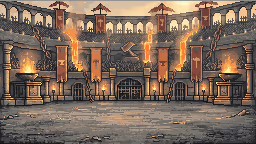
The crowd is watching. As a fight drags on, the arena's crowd makes its Demands, changing the rules for both sides: damage doubles, Shield strikes back, healing hurts. Let it run long enough and the crowd goes WILD!
After every battle, the battle report shows what each item contributed. Watch your combinations trigger, identify where your engine failed, and adapt before the next fight.
HUNT THE GODS
Mars, Vulcan, Bellona, Diana, Jupiter, Salus, Aquilo, and at the top, Pluto.
The Pantheon is a tree of eight houses. Each one you conquer opens the way to the next. Defeat a house's two demigods to wound its god, then face the god at the end of the road.
Every wound stays dealt. Whatever you take from a god, it keeps. A god you can't kill today, you can wear down across your attempts.
Conquer a god and earn its Blessing to carry into future runs. Use Divine Favors to open more Blessing slots and wear several at once.
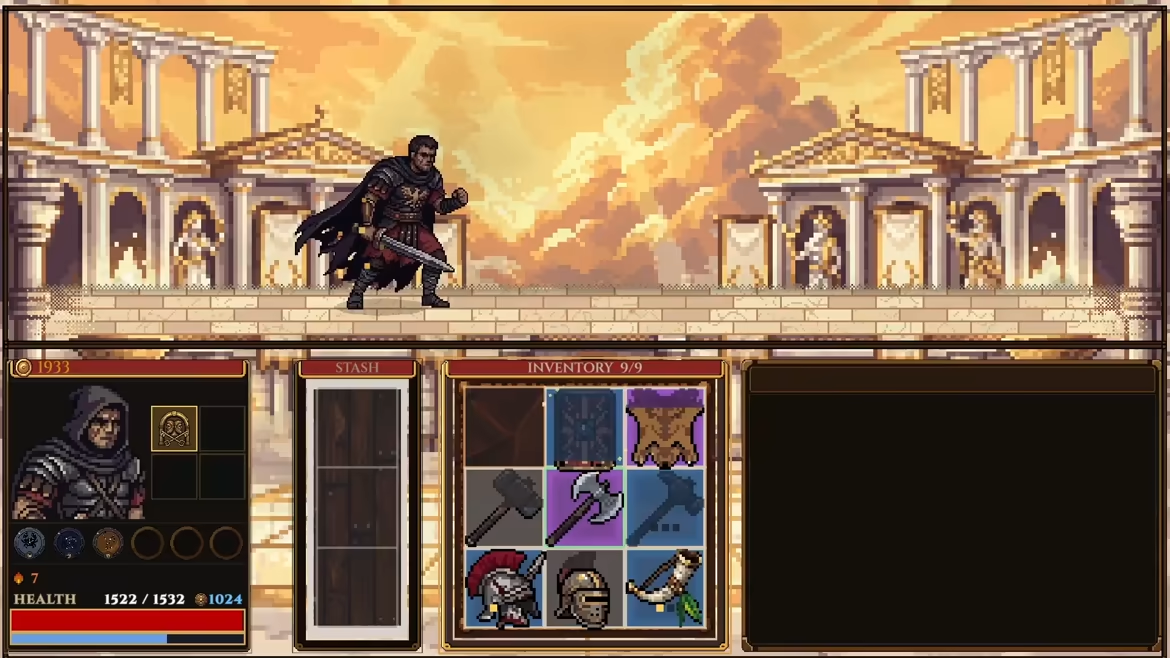
DISCOVER YOUR OWN BUILDS
The Last Pantheon is built around experimentation.
Rather than simply collecting stronger versions of the same item, you'll find pieces that change how other items function and open new directions for your build.
Find the generator.
Find the conversion.
Find the payoff.
Then see how far the engine can go.
Key Features
3×3 Inventory Building: Start with four slots and buy your way to sixteen. Your entire combat engine lives in that space.
1×1 Items: Every item fills one space, so positioning and adjacency stay easy to read while leaving room for complex combinations.
Merging: Drop a copy onto an item to level it up.
Engine-Based Builds: Combine generators, conversions and payoffs to create increasingly powerful interactions.
Automatic Combat: Build before the battle, then watch your inventory execute the strategy you've created.
The Crowd's Demands: The arena crowd changes the rules mid-fight, rewarding builds that can adapt.
8 Item Tags: Experiment with Winter, Mystic, Forge, Sacred, Flame, Venom, Wild and Blood items.
Cross-Tag Synergies: Specialize in one strategy or combine mechanics from multiple tags.
Status-Driven Combat: Build around Burn, Poison, Regen, Haste, Slow, Freeze, Empower, Shield, healing and more.
Meaningful Positioning: Adjacency effects make the location of an item almost as important as the item itself.
Build-Defining Items: Discover rare items that change how an engine works rather than simply providing larger numbers.
Constellations: Passive traits are stars. Collect them to complete constellations and unlock their signature powers.
The Via Sacra: A D20 decides each day's options: events, merchants and fights, with Fate turning events Radiant or Corrupted.
Assault the Pantheon: Eight Roman gods, each guarded by two demigods. The wounds you deal a god carry over between attempts.
Blessings: Conquer a god to earn its Blessing for future runs.
Permanent Progress: Earn Laurel Tokens and spend them on Honors in the Hall of Laurels. Fill out the Chronicle as you discover items, foes and events. Items are not locked, all items are available the moment you play. No long unlock cycles.
Replayable Runs: Shops, events and rewards offer different items every run, so no two builds come together the same way.

Details
| App ID | 5507640 |
|---|---|
| Type | Game |
| Planned release | To be announced |
| Developer | Rustin Robinson |
| Publisher | None |
| Platforms |
|
| Languages | 1 languages |
Community tags
Ranked by player votes
- Strategy1.4K votes
- Auto Battler1.2K votes
- Inventory Management1K votes
- Mythology973 votes
- Roguelite827 votes
- RPG827 votes
- Replay Value681 votes
- Choices Matter632 votes
- Singleplayer583 votes
- Roguelike535 votes
- 2D486 votes
- Asynchronous Multiplayer437 votes